OCCII (Onafhankelijk Cultureel Centrum In It) is one of Amsterdam's last standing autonomous cultural venues that revolves around the elements of inclusivity, DIY action and a wide variety of live music as well as political and social activities. Besides local indie bands, jazz or world music it's also a home for free improvisation, psychedelic electronics, noise, punk and much more. OCCII emerged from the Amsterdam squatting scene of the 80's and later gained a legal status. It slowly but surely established itself as one of the true free spaces for music heads in town built on community principles.
Thanks to its many volunteers, it has a consistent weekly program of music, children's activities, workshops and talks. Throughout the last 30 years OCCII as a venue has gained a cult status among many international underground musicians that came to play. Simultaneously it has built a broad audience that reaches far beyond Amsterdam. To celebrate the 30th anniversary today, the 14th of September 2022, it's time to share a live recording from the early days of the venue. Moreover, there are not many recordings from that early period, so if someone happens to have any other material from that time feel free to get in touch.
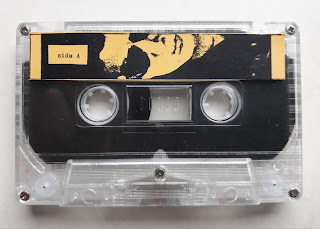
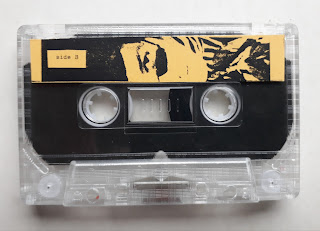
Gnot was an Amsterdam based ever-changing free improvisation and noise rock collective founded by Arjan van Sorge that was active throughout the 90's. During their live performances they also added a few theatrical and dance elements. Encyclopedia Galactica is a live recording of Gnot at OCCII Amsterdam that took place on September the 30th, 1994. On this occassion the band consisted of Arjan van Sorge (Drums), Bram Hessels (Guitar), Peter Verzijl (Guitar), Joe Williamson (Bass) and Pisti Benecz (synthesizer).
The concert was improvised and later divided into individual tracks with different titles and released privately on cassette in limited quantities. It's a little relic from the 90's underground scene of Amsterdam when free improvisation had its connection with the local squatting scene and different artist communes as well as autonomous (pirate) radio stations while the soil was being laid down for local underground venues like OCCII. Some other impro-noise acts from around those days were the Amsterdam based ex-Yugo acts of a.o. Gone Bald and De Reizende Verkoper and ofcourse the many ofshoot acts of the late great The Ex.
Long live the OCCII!
This post is dedicated to everyone that has played a part at OCCII over the last 30 years.
Since this is the third time that I write about Liza N. Eliaz on this blog I will re-use some of the older texts:
Liza Néliaz (1958 - 2001) was an electronic dance music producer and hardcore techno (terror) DJ originally from Oostende, Belgium. During the late 70's Néliaz started out as musician part of different Belgian avant-garde and new-wave bands. Inthe
80's Neliaz become more involved with the international home-taping
network and contributed her tracks to cornerstone compilations on
pivotal cassette labels like Insane Music (Belgium) and Exart (Netherlands).
By the late 80's, Neliaz started to play a self-invented style of proto-dance music
that somehow connected the DIY spirit of 80's home-taping with new beat
and the upcoming rave culture that would later evolve into established
genres like techno, hardcore and acid house. She was a pioneer (one out
of many ofcourse) in exploring these new musical styles in which perhaps
the most important element was musical continuity. From the 90's onward Liza 'N' Eliaz established herself as an
important hardcore techno DJ in the free party spheres which granted her the underground title of Queen of Terror. The name Liza
was adopted because in those days it used to be a nickname given to
Trans people in Flanders. She used her abilities as a musician for her DJ-sets that were uncompromising, lethal and full of energy. Neliaz lived a nomadic lifestyle dedicated to music until the end of her life. She sadly passed away in 2001.
The cassette that has surfaced here is an odd one. It was dubbed on a blank tape and specially given to Hessel Veldman and his family by Liza during the late 80's when she resided in Holland. First of all it contains the instrumental versions of the first Sensecruise release (not sure if there are any non-instrumental versions since I don't own the "official" Sensecruise part 1 cassette, so can't verify - let me know!). The interesting part is that the cassette continues with some loose tracks that I can partially recognize by checking out other releases, but there are also some tracks that are unknown to me.
Still the fact remains that this is a remarkable set of songs from that late 80's Neliaz sound palette. Quite a treasure, because we repeatedly have no idea whether more music by Liza might be out there. You never know what survived on cassettes of her friends or whether some music was given to befriended DJ's from the time. Her later DJ mixes are still alive on many platforms on the web and seem to inspire many people today and beyond.
Vermooste Vløten were a Berlin based female duo that consisted of Hannie Bluum and
Libójah Shnukki that was active during the 90's. During the first decade after the fall of the Berlin Wall a new spirit reconnected the divided German capital giving birth to dozens of open spaces, buildings and (temporary) venues. Squats were still around as true city institutes, rent was relatively cheap, techno started blowing up, bars with GDR retro furniture in living-room atmospheres were created and gradually a whole new generation decided to start a living in the new alternative culture capital of Europe.
Within this new scenery lots of interesting local acts started to emerge out of Berliners and newly attracted Berliners. A living-room music movement unfolded fostering both the creation of music as well as concerts that were taking place in small circles. From lo-fi indie rock to punk to cut and paste DIY songwriting to simple und Schick toy organ electronics to surf, to bedroom pop or folk, anything was possible. This was a type of music that was in synergy with daily life, city vibrations, friendships, nightly leisure and so on, not so much with an aim to play big stages or to gain a larger audience.
Vermooste Vløten was one of those amazing bands from the time. Channeling a bit of the earlier underground sounds from Berlin in the 70's and 80's and backed up by Nikki Sudden of Swell Maps as the producer they made their first album Crankle in 1996. A really nice home-made indie album full of sweet melancholic songs, a rebellious attitude, Velvet Underground and Nico infused moods and delicate experimentation. Even John Peel picked up on them at the time.
As a female duo they stand in a great tradition of other female underground acts from Berlin, from Nina Hagen to bands like Malaria!, Carambolage or 3 Tot in the 80's to Barbara Morgenstern or Cobra Killer in the 90's. All those sounds surely even created the subconscious fertile soil for a band like 2Raumwohnung later on. In past years it has continued in the Berlin underground with acts like Die Schiefe Bahn or As Longitude. But ofcourse there are countless other female acts to mention. Let's hope it will all carry on as it should. I'm sure it will though.
Vermooste Vløten made a second album in the 90's that is equally great and has more electronic influences. Reissues? Compilations of the Berlin living-room scene?
Something more light-hearted during these tough times....
According to the review on the cover of this cassette The Unwillings were a duo comprised of the German born Steve and Pete who were working at Audi-Motors in the German town of Ingolstadt. Whether any of that is true remains unknown, however it really doesn't matter.
The Unwillings were a Velvet Underground influenced band that released only one cassette on the Servil label that was created by bedroom-pop and home-taping pioneers Fit + Limo from Altdorf, Bavaria. Their rhythm box driven neo-psychedelic fuzzy garage tunes are in line with other bands from the time like 39 Clocks (Also from Germany, later incarnated into The Phantom Payn), The Rest (from Naples, Italy), Hi-Fi (from Amsterdam, Holland) or any other brown sugar dripping, sunglasses after dark, vintage fuzz pedal to the metal, slowly burning cigarettes, shiny boots of leather bands. These guys must have had records by Spacemen 3 and The Monks at home too.
The Unwillings also play a cover of Amon Düül II's Archangel's Thunderbirdwhich underlines their neo-psychedelic spirit. Actually, before Krautrock propelled the world into cosmic realms with musical innovation that we could have never imagined, many groups from Germany from the mid- and late 60's already heralded that near future to come. A series like the Prae-Kraut-Pandaemonium provides a great overview of that realm for those who are interested. With the neo-psychedelic revival of the 80's everything kind of went full circle.
Anyhow, as for now, here are The Unwillings for everyone who remains unwilling!
Here is another mysterious project from the Dutch home-taping culture. Hi-Fi was from Amsterdam and apparently related to a small circle of other obscure musicians from the city. Despite its hi-fidelity name, the Zauberklang (magic sound) of the band consists mostly of lo-fi damaged rock and roll and electrified experiments. A Velvet Underground starting point is deconstructed into dark and almost mechanical soundscapes fusing the lines between post-punk and psychedelia. As if The Index, 39 Clocks and the early incarnation of Skullflower would play together in some small basement. Distorted home-taping music with a strong druggy beatnik culture influence for people wearing their sunglasses in the dark. Hold your horse...
Within the Dutch home-taping culture of the 80's there's not a whole lot that sounds like this. A band I can think of is Roy G. Biv that was also Amsterdam based and looked for similar synergies of psychedelic rock with analog drums, synthesizer sounds and trancelike repetitions in their music. Then there was the band Vovokai from the city of Eindhoven that had a similar approach. Last but not least the mysterious Alien project qualifies for the sound as well. It remains surprising that these type of bands existed in the Dutch underground, probably even seperate from each others' influences.
Liza Néliaz (1958 - 2001) was an electronic dance music producer and hardcore techno DJ from Oostende, Belgium. During the late 70's Néliaz was part of different Belgian avant-garde and new-wave bands. Inthe 80's Neliaz was strongly involved with the international home-taping network and contributed her tracks to cornerstone compilations on pivotal cassette labels like Insane Music (Belgium) and Exart (Netherlands).
By the late 80's, Neliaz started to play a self-invented style of proto-dance music that somehow connected the DIY spirit of 80's home-taping with new beat and the upcoming rave culture that would later evolve into established genres like techno, hardcore and acid house. She was a pioneer (one out of many ofcourse) in exploring these new musical styles in which perhaps the most important element was musical continuity. No breaks were taken in-between the tracks. Through her inventive hardware set-up she was able to play a variety of different tracks that were weaving in and out of each other continuously resulting in what we would call a "live-set" today. From the 90's onward Liza 'N' Eliaz established herself as an important hardcore techno DJ which granted her the underground title of Queen of Terror. The name Liza was adopted because in those days it used to be a nickname given to Trans people in Flanders. She used her abilities as a musician for her DJ-sets that were uncompromising, lethal and full of energy. Neliaz lived a nomadic lifestyle dedicated to music until the end of her life. She sadly passed away in 2001.
Sensecruise Part 2 is an early cassette by Liza Neliaz that was released around 1989 or 1990. It's the sequel to the Sensecruise Part 1 cassette which I've never heard. Unfortunately there is no cover for this tape, but who knows whether this was properly distributed at the time in the first place. Musicwise it embodies the sound of the transition of decades and the birth of a new sound of the 90's. Sensecruise Part 2 contains a pretty spot on home-made rave sound. I filed this release under "Belgium", but it clearly could have been recorded in France or England at the time. The music resembles the early work of 808 State or Orbital here and there, big acts (as we all know) that would soon succesfully spread similar sounds on a worldwide scale. However Liza Néliaz was never interested in the commercial aspects of dance music and couldn't identify with the course the culture took when free parties were starting to decline and certain DJ's were gaining so called star levels bringing competition and jealousy into a free music culture. Her DJ sets could sound relentless at times, yet humor, interaction and joy through the music were the main reasons behind Liza's musical practices.
Maybe it's the first time some kind of dance music comes to the blog, but also that is part of the underground music kaleidoscope of the past decades. Another piece of the Liza Neliaz puzzle at least. A special musician that deserves some proper attention from labels out there. Maybe someone has more early recordings?
Here's another article in French about Liza Néliaz that also provided some of the information above.
Kindly donated by Hessel Veldman (Y Create Archive)
Here's another highly obscure cassette release from the American underground. Out of a mixture of lagging electronics, dark vocals, minimal synth experimentation and flashy guitarwork arises the world of Eulipian. By the end of the cassette we learn that the name Eulipian was taken from a Rahsaan Roland Kirk suite called Theme For The Eulipions. In any case, the music of Eulipian definitely belongs to that American underground feeling of the 80's where the nightlife soundtrack consists of a cocktail of no-wave, disco, punk, Detroit techno, industrial experimentation,funk etc.
Somewhere in that underground we meet Eulipian who slowly turns us into Eulipians with an intimate and hypnotic mix of tracks that comprises of fatalistic underground punky-junkie beatnik mumbling over dark and sleazy synthesized dream-realms with lots of weird electronics, experiments and collaged sounds. It all grows into each other and the entire cassette can be seen as one long trip. The Eulipian one man project kind of resembles Foetus, but is musically closer to an American home-taper like John Lafia.
I have no idea whether the title of this is Heetseeker or Leisure Fear, but let's use them both. I also don't know who was behind the Eulipian moniker or to which part of America this belongs. I left the one-sided cassette unindexed as I felt that the continuity of the music was intentional.
It would be nice to know if more Eulipian music exists. Mysterious, strange and atmospheric. Probably also the good stuff when listening under the influence.
About a year ago a couple of hundred of tapes from an old collection came into my hands. Most of them were self-recorded copies of existing albums, mostly vinyl, that someone had been copying throughout the 80's. The majority of the music on these cassettes did consist of weird new wave, experimental and industrial music. I started to devide the tapes into different sections, the exact recorded copies of albums I put away in one box and the unknown cassettes without any written information on them I stored away in another box to examine. I also threw away dozens of tapes that were poor in quality and had nothing to do with underground music in general. Even now I still have some bags left with the unknown cassettes. I still have to listen to them and figure out what is on there.
In-between all of this stuff there was a self-made series that consisted of overdubs of rare NDW cassettes all with typewriter style titles and tracklisting. Because of that information I could luckily connect this one here to its original: a release I had been looking for over at least a decade. Thus, the digitization of this is somewhat less sharp sounding because I had to use a copy as source. Nevertheless we should be very happy that someone copied this rarity in 1981 for us to hear today! It doesn't seem likely this will surface any time soon in any sound quality (also with regard to the collectors who do seem to have this).
The Westhafen Plassette (Platte und Kassette) is a true relic and highly important item of the West-Berlin underground music scene of the early 80's. Released in a scarse edition of only 200 copies this three-way split release, that consisted of a 7 inch vinyl and a cassette, compiled three underground groups hailing from Berlin: Bodenpersonal, Tumorbeus (Read: Tumorboys), and Siedlerheim. It came out on the obscure cult label Kompakt Produkte from Berlin. The music consists of some of the purest experimental minimal synth and DIY new-wave music in the tradition of the grey and wall-divided Berlin music underground of the time:
Bodenpersonal with their Zufallsprodukt Eines Langweiligen Wochenendes (Chance product of a boring weekend) was recorded in a factory in Berlin in 1980 and consists of great minimal synth and DIY-music improvisation.
Tumorbeus create such abstract synthesizer driven atmospheres that the
music almost becomes techno-like, mindblowingly ahead of its time to say
the least. I really wonder whether they did more music in those days.
They also remind me a bit of the Studio 12 bands from Haarlem, The Netherlands from the early 80's with bands like Nexda and Cargo Cultus.
Siedlerheim seems to be the more traditional NDW group, but also ventures into electronic experimentation. They have more structured tracks with vocals and even incorporate the occassional saxophone burst. Maybe their sound is actually the most representative West-Berliner sound of the time. An energy that was also captured strongly in the Berlin Super 80 film, that gathered underground music and performance video's recorded on Super 8 Film by different artists from Berlin during the 80's (I will add that video below. Update: the video has been removed). Both Bodenpersonal and Siedlerheim have been re-released more than a
decade ago by the great WSDP label specialized in rare NDW cassettes.
Some of the tracks that are on the Westhafen Plassette were also compiled by WSDP, just not
everything. The Westhafen Plassette is partially a musical time-document but it also displayed its avant-garde vision of futuristic musical possibilities beyond the political barriers of the bleak urban landscape and society of Berlin at that time. It stands closely next to many other important underground bands from Berlin of the time like Kompakt Produkte peerband Thorax Wach, Notorische Reflexe, Die Tödliche Doris, Sentimentale Jugend, Malaria!, Einstürzende Neubauten, An Die Schwarze Kunst, Sprung Aus Den Wolken and many more. Both in instrumentation and energy very strong. Those analog machines in combination with this urgency to experiment really resulted in some of the greatest music in general it seems.
It's nice to post this on the blog since 2019 marks the 30th anniversary of the fall of the Berlin Wall. If you would like to dig deeper into the theme of the underground music history of Berlin I really recommend the book Berlin Calling, A story of Anarchy, Music, the Wall and the Birth of the New Berlin by Paul Hockenos (2017).
A long story this time, anyway... could have saved this one for Christmas, but I have so much more to share on the blog... Enjoy! Sturm und Turm!
Here we have one of the pivotal compilations covering the Polish underground from behind the iron curtain during the 80's. It came out right before the change of the political system in Eastern Europe in 1989 on a French label. Obviously many of these bands only released their music marginally in their own circuits. They had to operate in the underground because of their subversive nature and artistic expression directly or indirectly opposing the socialist regime. Poland had a longer history of underground bands and artists fitting that realm already in the early 70's, with examples like the mythical psychedelic band 74 Grupa Biednych and improvisers like Grupa W Składzie. The Polish music underground has always been heavily inspired by Jazz and improvisation. Also more known bands from Poland that were accepted by the regime during the 70's like Niemen or SBB were quite experimental in their approach. Polish jazz played a hugely influential role behind the iron curtain during the 60's and 70's and became a trademark of adventurous quality jazz. During the 80's a broader underground had emerged in different Polish cities. The improvisational groups were now accompanied by new wave bands, punks, industrial noise makers and everything in-between. Quite a strong grey and bleak accent was being put in the music, reflecting the last bleak decade of communist totalitarian repression. More and more Polish music was slowly finding its way to the west by cassettes that were swapped as well through Polish dissidents that made their way to the west of Europe. One of the greatest post-punk bands that had a Polish singer (Andrej Dziubek Nebb) was Holy Toy from Norway. Their first album Warszawa (Warsaw) still stands as one of the strongest experimental new-wave albums from the 80's and incorporates a strong Polish component.
Now that I think about it, even Joy Division was called Warsaw at first ofcourse. In the imagination of wave bands and punks from the west during the 80's Poland was definitely the epitome of bleakness and a symbol of the east-west schism that was casting its darkening shadow over Europe including the threat of nuclear warfare. This was pushing the no-future mentality even further in the heads of many youngsters. Subsequently theme's like the Warsaw-Pact were often used by western wave bands from the 80's. But let's get back to this release: Polish Road was one of those important compilations for Polish bands to be heard in the west spreading their underground sounds. It's a very nice, although heavily fragile, recording of different bands ranging from punk, wave, industrial and improvisation groups. It was released as a double cassette in a VHS case. The first volume consists of more experimental and punk groups, while the second volume has more improvised and electro-acoustic bands on it of which Reportaz might be the most known. The music was all recorded between 1985 and 1988, often containing live recordings. I won't go into every band separately because it's too much work, although from some bands I will upload more tapes in the future of the blog.
Polish Road can be seen as a critical undermining of the socialist regime and a time document of what was going on at that time in the Polish underground, while Solidarność was already making big leaps and the change of political system was very near. Please note that I'm putting this music in a political narrative, but a lot of this music was just artistic expression and didn't have any political agenda in itself.
After the communist period a hopeful time arrived to Eastern Europe during the 90's (apart from Yugoslavia), but nowadays we know how much political difficulties we are facing yet again. It slowly fosters the realization that this music and its urgent character, pushing through all possible limits, whether having no audience, no listeners or the lack of technical production or musical skills, yet giving expression to the inner spirit and the need for change in society, could still be perfectly inspiring today.
Many more obscure Polish cassettes will be uploaded to the blog with time.
Survival Instink was a project by German musician Bernd Jestram, perhaps recorded together with others, perhaps not. There is a little child singing on one of the tracks on the B-Side. Jestram is one of the important underground musicians from East-Berlin who played in many iconic punk and experimental bands from the other side of the wall surviving the German socialist regime. Among others he played in Rosa Extra (aka Der Schwarze Kanal) which was probably East-Berlin's most important punk band that had formed already in 1979. He founded his own band Aufruhr Zur Liebe in 1984 and later joined another important experimental band called Ornament & Verbrechen. Aside from this he played in numerous other bands and did many solo works. You can find a lot of those bands and related material over at Tape Attack. Obviously none of these bands in the DDR had proper chances of releasing anything so their music circulated on tapes in the underground. They spreaded their common experience of bleakness due to the repressive totalitarian regime as well as the daily derooted alienating feeling of misplacement in a city that was torn apart by warfare and corruptive political powers.
Survival Instink was another nice project by Bernd Jestram, although a somewhat later project from 1988. I couldn't find any information about it whatsoever. It's also not listed on Discogs. It's a very loud (!) lo-fi cassette that contains some heavily distorted cyber garage-punk dedicated to urban dystopia. Lots of raw guitar sounds, manic drum machine clattering, and dark distorted vocals. The music probably appeals to fans of Chrome, Strafe Für Rebellion or Second Layer and even reminds me of equally obscure stuff like the rock era of Salò Mentale or Spalanzanis Töchter.
Merry Christmas and an Archaic New Year to all followers and friends of the blog!
Once again we are rounding up another year in an increasingly chaotic world! After almost 6 years of running this blog on my own, in my own time as some kind of personal music mission paying hommage to the blogosphere, years of record digging and sharing my musical insights, I can proudly announce the first ever Archaic Inventions mix. This is the first volume in a series of conceptual mixes that combines both written narrative and music as a way to uncover meaning. The mixes belong to an external realm of the blog. Although the music mixes will have a relation to the Archaic Inventions platform.
The first volume is created by my friend, Sucked Orange Gallery creator, co-founder of the Braille Satellite festival, long-time experimental music selector, one half of subterrenean surrealist and idea flowing music selecting duo Octatanz (with Matas Labasauskas): Oscar Olías, better known as Oscar Der Winzige.
Oscar is an underground figure based in Berlin already for a long time, who originally comes from Madrid, Spain. He was kind enough to dig into the entire Archaic Inventions catalogue to create one of the most outer-worldly mixes, surprising any follower of this blog, including myself! Not only can this be viewed as an insight, profile and introduction to what is to be found on Archaic Inventions, it is, as always with Oscar's selections, a trip transporting the listener to another musical planet within an own universe of exploration. To me this mix represents the combining of forces. The finding of music. The sharing of music. Knowing how to select. Knowing music. Cultivated on the path of being a student of music. Bypassing the platforms. Telling an important story. Starting from the ground, hasta el espacio!
Let's tell a story! Here we go!
- Oscar Der Winzige grew up in the suburb of Hortaleza in the North-East of the Spanish capital Madrid. At a young age his father suddenly left this earth leaving behind an important record collection of a.o. progressive rock, cosmic electronics and krautrock. Already as a young child the likes of Tangerine Dream and Klaus Schulze would bring Oscar to other worlds. Within the raw society life of the Madrilenian suburbs and adolescent dreams, Oscar started to obtain a different mindset than his peers. Most of the suburban friends were listening to completely different musical styles while he was developing something reaching beyond daily life routines.
When adolescence hit Oscar, he started to go out to a club with a forged ID. Encountering the concept of the "DJ" he immediately knew he wanted to do something similar yet very different. Instead of the egocentrism surrounding the "DJ" he saw the potential in the idea of the music selector, he became aware of the art form and the transference of messages that were concealed in this practice. At first Oscar started to buy techno, play for his friends at home and soon started to become known in local circles and social centers where there were possibilities to play music (inluding the use of stolen traffic lights used as disco lights). The precarious introduction to some of Madrid's clubs started to give hints of alternative fashion, showed the effect of music on people and were the beginning of a deeper exploration of musical styles for Oscar.
The eclectic music explosion came to its full potential when Oscar met another much older music selector and experimental musician from Madrid during a period when he was working in a flamenco bar: David Krapoola. David was playing some vinyl in the attic of a random house and had piles of records. He was a one-man radio. An eclectic explosive force of musical madness. Soon they became friends and started to share music, buy records and formed a music selector duo travelling through every depth of the Madrid nightlife. David adopted Oscar and they also started to do experimental music together as well as subversive art projects. The older Spanish guys baptized Oscar with the nickname "El Pequeño", "The small one", which later resulted in the name Oscar Der Winzige. Gradually the perception of music became more than eclectic during this time. Like an eclectic eclecticism. In the same period Oscar became resident at the "Oui Club" and also started to play records at most of the experimental and sub-cultural concerts that were taking place in Madrid. Oscar became an autodidact anthropologist of music, channeling an everlasting drive to gather and find music while fostering a deep personal relation with it. A once-in-a-lifetime-drive that would never return in such pureness and with such hunger. But then... the crisis arrived to Spain.
Clubs lost their ability to explore and became more and more commercial. Fertile grounds for happenings and experimentation in music were slowly drying up. People didn't risk anything anymore. The predominant feeling was that soon a new destination had to be reached, a place where this music trip could become a life mission, a place where many different talented and creative people gathered to find new premisses for this lifestyle. That place became Berlin.
In Berlin there were already friends in the same field, namely the talented DJ and eternal friend Laura ODL (As Longitude), whom Oscar had known for some time already. Also new people appeared to the scenery like José Luis Gomez (a film-maker from Barcelona) with whom Oscar founded the Sucked Orange Gallery in Neukölln (named after the collaged 1989 Nurse With Wound album "A Sucked Orange"), where through a girl we mutually knew I (the author of this piece) also entered this story. At the gallery that we ran many beautiful experimental concerts were organized and a few exhibitions as well for a longer period, often in collaboration with Rinus van Alebeek of Staaltape and also in collaboration with the legendary record store Staalplaat. A lot of communal nights took place, dancing 'till the morning, every kind of drugs, every form of love, people from all over the globe gathered, rules were destroyed and defended, Berlin police raids were part of our weekly divertissement, people were built up and broken down and many tears were shed both by joy and by sorrow. My own meeting with Oscar was another truly important moment for our mutual development, for the discovery of music and by times had overpowering implications, yet what we lived was a unique chance of self-exploration not many people get a chance to in a lifetime.
In any case it was a time that would become the first landmark of action, materializing a certain musical philosophy in life, based on a journey that was given solely by the inexhaustible wealth and endless realms of each one's history in and connection to Music. This was either coming from seeing many concerts of legendary acts and many parties that all of us had experienced in the underground of our respective countries as well as our history of making music ourselves. Another musical force was coming from the birth of underground music blogs and the time that was spend in music research. Maybe they were not the most important component, but helped in offering material and knowledge.
After this vibrant period the Sucked Orange Gallery ceased its activities and became a non-public hangout for friends. Slowly a new dawn arose in Berlin and Oscar and many friends were simultaneously playing different venues and festivals in Berlin (and beyond) and new musical alliances were effectuated crossing different aspects of the Berlin music upper- and underground. Due to the meeting of various international minds, slowly also a new way was paved towards the far East of Europe. A path to the Baltics. A few Lithuanian tourists had heard strange music in Berlin by chance and felt a common understanding. They invited Oscar together with Laura ODL to Vilnius, Lithuania. One of these people from Lithuania that Oscar met was Matas Labasauskas. A like-minded soul interested in working creatively in service of a community, based on free-spirited inclusivity and inner-growth. Oscar and Matas started the project Octatanz: a musical duo in which "together they offer a selection of ideas floating around in the deepest recesses of musical subculture". An important new musical entity touring around Europe injecting magical sounds into small communities of explorative and receptive listeners to find new states of being.
Eventually the Berlin-Vilnius connection resulted in the creation of the STRCamp Festival, that later morphed into Braille Satellite Festival: an annual DIY music and arts festival that takes place in the park of Mushroom Manor, Lithuania. In the pseudo-hidden Lithuanian countryside the festival facilitates a communal gathering based on the deepest DIY realms of music in contemporary times characterized amongst others by: "relax shock, dance laugh in the night, the best selection is boring, only a dream line-up doesn't work, nothing too serious, social transmutation, inclusivity and love". With the time Oscar and Matas brought together key groups of music-people from a.o. Lithuania, Spain, England, Italy, France, Netherlands, Portugal and Germany, which is an unimaginable achievement in itself. As for those would like to be part of this: in the summer of 2019 a new edition of Braille Satellite will take place. -
This article is another little piece of a music puzzle that one day I will put together more thoroughly with all its different dimensions and probably more will become visible. That story is extensive and might be more suitable for a book or something, haha! For now we listen to the beautiful and amazing "Archaic Inventions mix" made by Oscar Der Winzige.
Lastly
This blog will continue in full force in 2019. Once again I am happy that I can promise that the music I am able to provide will be even more insane than before. We keep on working on all the different aspects of this strange music world in order to maintain and cherish a little bit of its essence and to give it a future. Also I am currently working on releasing the first Archaic Inventions record which will also mean the birth of a new music label. More details very soon!
Much love to you all and don't hesitate to love. Think and feel for yourself. Don't believe the hype. Help to build. See you soon.
The general worldwide consensus is that the Dutch language is quite an ugly one. I wouldn't disagree with that as someone who speaks Dutch. Even for native Dutch speakers (either in Holland or Flanders) music in which they sing Dutch is often hard to stomach. Luckily there are some exceptions in our world of the odd. For example: Belgian wave band Aroma di Amore, the third album of Dutch Ultra-band Minny Pops, Mecano-member Ton Lebbink and a list of stuff from the sixties etc.
P.E. De Oskars is a highly obscure group that fits in perfectly with all the aforementioned bands. I can't find any information on them other than that they were from Rotterdam. I don't know if they ever made more music other than this. This cassette, which translates to "No poleaxes, but drums", is a cool and exceptional EP from Holland in which new wave, rock in opposition and some crypto-ska come together. Actually the saxophone and organ really make this music a treat. The lyrics are often political and poetical in the right squatting-mentality manner of Holland in the eighties. It also reminds me of The Schismatics, The Black Sheep and more bands that were based in Rotterdam and connected to the legendary artist squats of the Quarantaineweg in the eighties. Good stuff.
This is a pretty rare trifold record that came out in France as promotion for the Continental Edison audio brand. It was made to demonstrate their hi-fi equipment. Probably through the music industry and some record label connections this record somehow got some of the weirdest bands from France's seventies on there. Most of these bands were on Richard Pinhas' (Heldon) Urus Records which was called Disjuncta before that. Every side of the record was dedicated to a different audience and had one act covering one whole side. None of the tracks have titles listed. The last record has an easy listening trumpet orchestra on the E-side and a Beethoven suite on the F-side, which I did not include in this rip. The rest of the sides are recordings of great underground acts of zeuhl and progressive rock music. It's a mysterious combination of acts on a promotional record like this. I don't know if Festival Du Son was indeed a real festival, I can't find that information.
The A-side (Pour Les Fans de Pop) is represented by French Zeuhl band Nyl which made one pretty good album in the mid-seventies and is a prime example of a Gong and Magma influenced psychedelic rock band, but for this record described as the "pop-music representative". The first song (of the entire record actually) might sound pretty generic, but later on the music becomes more psychedelic and agressive with cool French English Vocals. I really think that Nyl was a much better band in reality than is to be heard on their only published record.
The B-side (Pour Les Amateurs D'Exotisme) is the Gamelan group Bali-Barong from Indonesia that was recorded during a field recording by Jean-François Bizot, who also created Actuel (sub-division of BYG records imprint) and was an important person in the French underground culture from the seventies and beyond. Bali-Barong published one album on Disjuncta records in 1975.
The C-side (Pour Les Avant-Gardistes) is by French psychedelic guitarist Alain Renaud, who was also in Heldon in the early seventies and made a couple solo albums. His music on here is a typical mixture of acoustic and electric guitar combined with some synthesizer sounds. I kept this side as whole as I felt it was intended originally like that.
The D-side (Pour Ceux Qui Aiment Le Jazz Moderne) is done by one of my personal favorite Krautrock groups from the seventies Exmagma. Exmagma was from Stuttgart and consisted of Thomas Balluff, Andy Goldner, and Fred Braceful (who also played with Wolfgang Dauner in his group Etcetera). Exmagma played some top notch fully improvised jazz-rock kraut and have made two legendary albums.
All in all it's a cool record with some recordings of bands of which we don't have that much material. Possibly this material is also on some of the already published records by these artists, but I was too lazy too verify. I had to record the album quite loudly because of the crackly condition. Ironic that Continental Edison used this record as a showcase of how great their audio equipment was, but pressed the music on some of the thinnest slabs of vinyl you can imagine and put it in hard plastic inner sleeves. Some internet prices I have seen for this are not worth it. Anyways.
After this first record I posted a while ago, here is the second Dutch private pressing of this freaky Japanese acid drenched, political activist theatre outfit. Actually the recording for this album, which came out one year later after Story Of Eight Dogs, was made during a performance in London, but was only released in The Netherlands in limited quantities. More information about Tokyo Kid Brothers in the previous post.
The music consists again of some real communal psychedelic jams combined with cheerful songs and a lot of humor. Through this stance the Tokyo Kid Brothers are also able to express their criticism on certain things in society. Unfortunately, unlike their early Japanese releases, most songs are cut off quite early which doesn't allow them to get into real long jams, but it's nevertheless really enjoyable. You really get a sense of a community feeling during the play, because they always interact with the audience. Also during the first couple of songs a baby is crying throughout the recording.
Some of the highlights on the album consist, among others, of Motorbike in which they mix a song in Japanese with yelling "Motorbike". In another song called Jumping Song, one of the Japanese girls is "looking for the monkeys" and tells people they look like a monkey in a very playful manner. The most psychedelic jam is Goeika. Other songs are about Mao, socialism or have hippie titles like Budist Trip. Ofcourse part of the NWW-List.
This vinyl is a private pressing of the recording of the play “The Story of Eight Dogs” by Japanese
musical theatre group Tokyo Kid Brothers. In 1971 they played the "The Story
of Eight Dogs" for five weeks at the Shaffy Theatre in Amsterdam, The
Netherlands. This record came out in very limited quantities in Holland during their period
of performing in Amsterdam.
These
NWW-listers stand in a similar tradition as other counter-cultural musical theatre outfits
like the American Living Theatre or Théâtre Du Chêne Noir from France. Tokyo Kid Brothers
was founded by Yutaka Higashi in 1968 and made some very weird recordings during
the early seventies like the albums “Throw away the books let’s go into the streets” and "Golden Bat" from 1971. Those are being regarded as two of the most important cornerstones of Japanese freak-out psychedelia from the seventies. They should reissue that stuff on vinyl. Tokyo Kid Brothers' early sound was reminiscent of other Japanese acid fuelled
underground groups like J.A. Seazer and Food Brain, but also brings to mind
some of the more free-form krautrock bands like Amon Düül and Faust. During
that era The Tokyo Kid Brothers performed quite often outside of Japan, like New York and
Amsterdam.
This recording
has some great seventies underground jams combined with intense Japanese vocals.
Also the difference between audience and actors at times becomes blurry when
they involve the audience and try to teach them about Japanese language
characters and so on in a subversive and playful manner. All with a great Japanese
English accent.
My copy is
not in the best shape as you can see and is quite crackly. It might have had
an insert, but I don’t have it. The record doesn’t list titles of the songs, which doesn’t
really matter, because it was meant as a play. Anyway this is crazily rare if
you’d ask me and absolutely essential to all Japanese psych-heads and NWW-list
fans.
“The history of eight dogs is the story of the
Japanese young generation in reality and illusion. We came to Holland: Exodus
from Japan!”